Scripture Scents
Cinnamon
Hebrew qinnamon
Exodus 30:23 · Song of Songs 4:14 · Revelation 18:13
Cinnamon was a luxury of the ancient world, carried from the far east by traders who guarded its source. In Scripture it is a holy ingredient, a lover’s spice and, in Revelation, one of the riches of fallen Babylon.
In Scripture
Take the finest spices: of liquid myrrh 500 shekels, and of sweet-smelling cinnamon half as much, that is, 250, and 250 of aromatic cane, and 500 of cassia, according to the shekel of the sanctuary, and a hin of olive oil. And you shall make of these a sacred anointing oil blended as by the perfumer; it shall be a holy anointing oil.
Exodus 30:23–25 (ESV)
Your shoots are an orchard of pomegranates with all choicest fruits, henna with nard, nard and saffron, calamus and cinnamon, with all trees of frankincense, myrrh and aloes, with all choice spices …
Song of Songs 4:13–14 (ESV)
cinnamon, spice, incense, myrrh, frankincense, wine, oil, fine flour, wheat, cattle and sheep, horses and chariots, and slaves, that is, human souls.
Revelation 18:13 (ESV)
“Sweet-smelling cinnamon,” 250 shekels of it, goes into the holy anointing oil of Exodus 30. In Proverbs 7:17 it scents a bed with myrrh and aloes, and in the Song of Songs it grows in the beloved’s garden of spices. Revelation 18 lists cinnamon first among the cargoes the merchants mourn when Babylon falls, a reminder that fragrance can serve worship or vanity.
What it is today
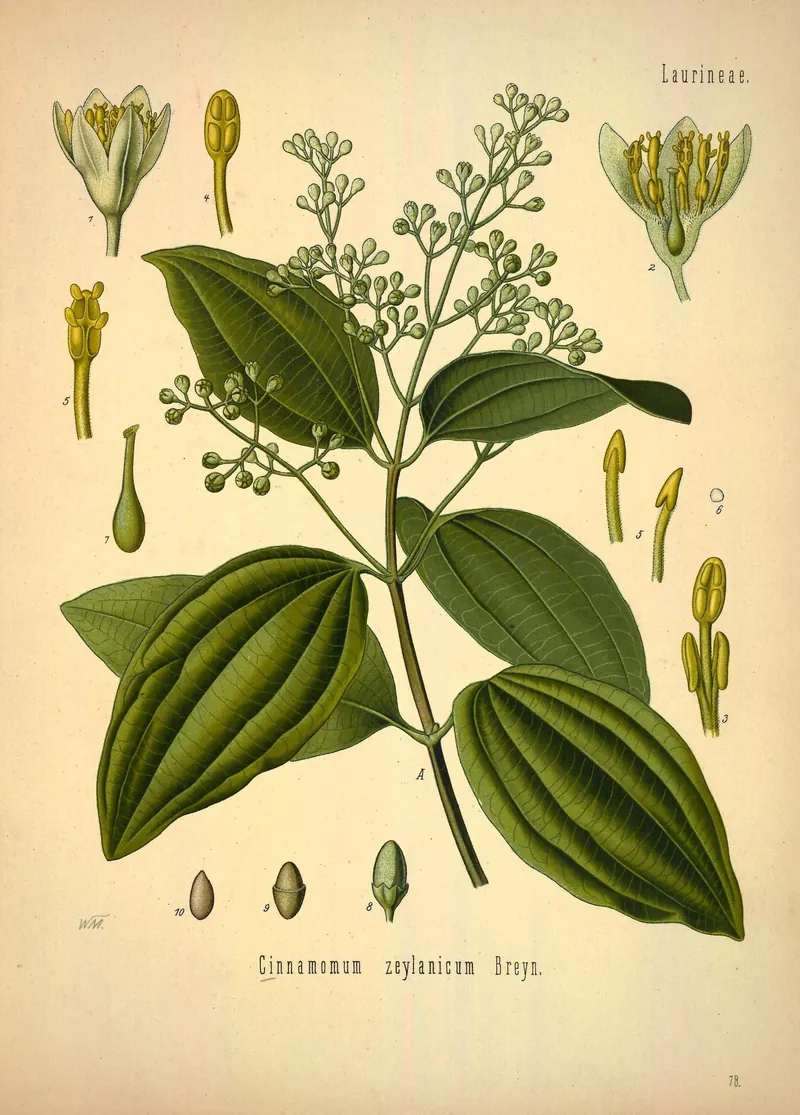
True cinnamon is the inner bark of Cinnamomum verum (also called C. zeylanicum), native to Sri Lanka. Perfumers distill the bark, which is fiery and sweet, or the leaf, which smells more like clove. Whether the cinnamon of Exodus was the same plant we buy today cannot be proved, but the Hebrew qinnamon and the Greek kinnamomon clearly name a prized aromatic bark.
In the bottle
Bark or leaf
Hot, sweet spice. Bark is fiery-sweet; leaf is more clove-like.
First sniff: Hot, sweet, woody spice. Once it settles: Warm, dry cinnamon-bark woodiness. Reminds people of: Cinnamon sticks, cinnamon rolls.
Cinnamon brings heat and sweetness to the heart of a blend and pairs naturally with orange, vanilla, clove and benzoin. It is one of the most strictly limited materials in perfumery. Bark oil is rich in cinnamaldehyde, a strong skin sensitizer, and leaf oil is high in eugenol. Use it at very low levels and always check current IFRA limits.
Safety: Cinnamon bark (cinnamaldehyde) is a strong skin sensitizer and heavily restricted. Leaf is high in eugenol — also restricted.
Blends well with
Sweet Orange, Clove Bud, Vanilla, Apple Notes, Benzoin, Rose, Cognac Oil.