Scripture Scents
Saffron
Hebrew karkom
Song of Songs 4:14
Saffron appears only once in the Bible, in the Song of Songs’ catalog of the beloved’s garden. Even then it was a spice of kings, and it remains the most expensive spice in the world.
In Scripture
Your shoots are an orchard of pomegranates with all choicest fruits, henna with nard, nard and saffron, calamus and cinnamon, with all trees of frankincense, myrrh and aloes, with all choice spices …
Song of Songs 4:13–14 (ESV)
In Song of Songs 4:14 saffron (Hebrew karkom) grows among nard, calamus, cinnamon, frankincense, myrrh and aloes. The list is a garden no real plot could hold, gathering the costliest aromatics of the known world into one image of the beloved. The point is abundance and delight: the bride is as rich and fragrant as every precious spice together.
What it is today
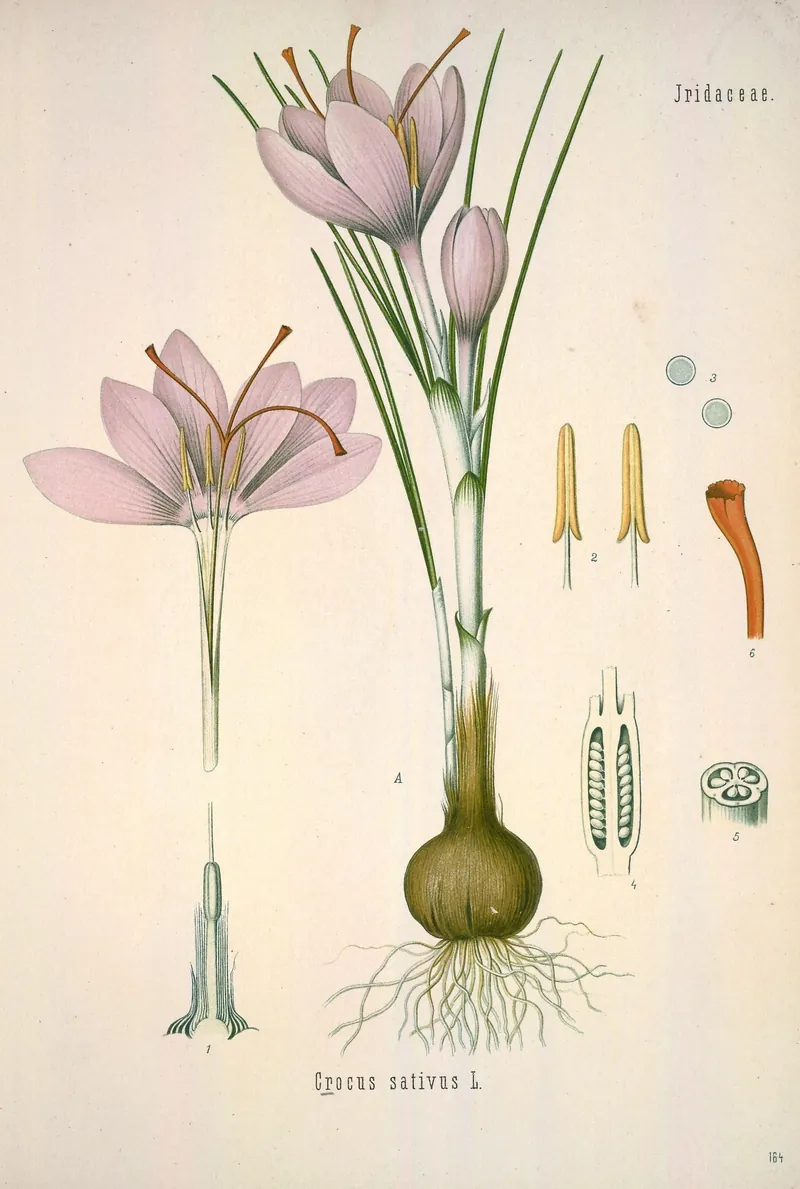
Saffron is the dried stigmas of Crocus sativus, the autumn-flowering saffron crocus. Each flower gives only three threads, picked by hand, so a single kilogram takes well over a hundred thousand flowers. Iran grows most of the world’s supply. Natural saffron extracts exist, but perfumers usually recreate the note with safranal or the aroma chemical Safraleine.
In the bottle
Safranal or Safraleine
Leathery, hay-honey and metallic spice. Reads instantly as luxurious and warm.
First sniff: Leathery, honey-hay spice with a metallic edge. Once it settles: Warm, suede-like, slightly sweet and radiant. Reminds people of: Saffron rice, saffron threads, suede.
Saffron smells leathery, honeyed and metallic, with a dry, hay-like warmth. In modern perfumery it is the classic partner of rose and oud and gives amber and woody blends a glowing, spiced richness. A little goes a long way, because it can quickly dominate a heart.
Blends well with
Rose, Oud, Ambroxan, Labdanum, Sandalwood, Jasmine, Hedione, Cedarwood.