Scripture Scents
Labdanum
Hebrew lot
Genesis 37:25 · Genesis 43:11
When Joseph’s brothers sold him, the caravan that carried him to Egypt was loaded with fragrant goods. One of them, lot, is rendered “myrrh” in most English Bibles, but many scholars believe it was labdanum, the sticky resin of rockrose.
In Scripture
Then they sat down to eat. And looking up they saw a caravan of Ishmaelites coming from Gilead, with their camels bearing gum, balm, and myrrh, on their way to carry it down to Egypt.
Genesis 37:25 (ESV)
Then their father Israel said to them, “If it must be so, then do this: take some of the choice fruits of the land in your bags, and carry a present down to the man, a little balm and a little honey, gum, myrrh, pistachio nuts, and almonds.
Genesis 43:11 (ESV)
In Genesis 37:25 the Ishmaelite caravan from Gilead carries “gum, balm, and myrrh” down to Egypt. In Genesis 43:11 Jacob sends his sons back to Egypt with “a little balm and a little honey, gum, myrrh, pistachio nuts, and almonds” as a gift for the man who, unknown to them, is Joseph. In both verses “myrrh” translates lot, a different Hebrew word from mor, the usual word for myrrh. That is why many scholars identify lot with labdanum, a resin that grew in the land and was traded to Egypt.
What it is today
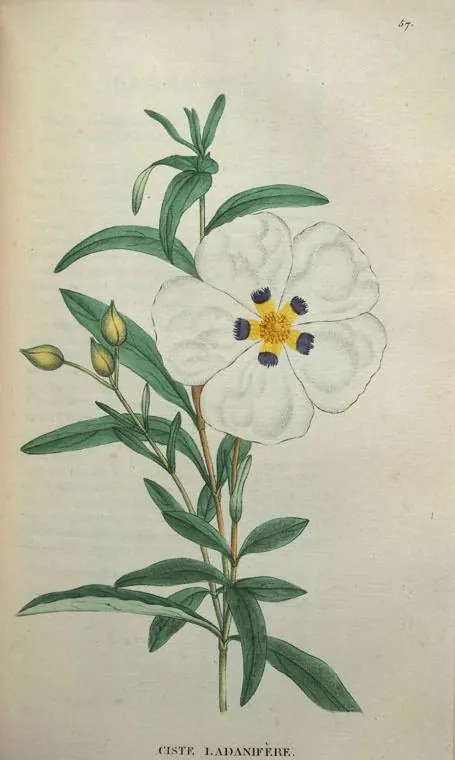
Labdanum comes from Cistus shrubs (rockrose) around the Mediterranean, chiefly Cistus ladanifer in Spain. The plant sweats a sticky resin in summer heat. The ancient historian Herodotus describes it being combed from the beards of goats that had grazed among the bushes. Today it is boiled from the leafy branches and refined into absolutes, resinoids and oils.
In the bottle
Cistus resin
Dark amber, leathery honey and warm skin. The heart of the classic amber accord.
First sniff: Dark, sticky amber with leathery-honey and herbal notes. Once it settles: Deep, warm, ambergris-like skin warmth that lasts for days. Reminds people of: Amber resin, leather, honey, warm skin.
Labdanum is the heart of almost every amber accord: dark, warm, leathery and sweet, with a balsamic, ambergris-like richness. It lasts a very long time on skin and gives blends depth and weight. It sits naturally with frankincense, myrrh, benzoin and vanilla, and a little brings a devotional blend a warm, candlelit glow.
Blends well with
Vanillin, Benzoin, Frankincense, Oakmoss, Bergamot, Patchouli, Rose, Clary Sage, Oud, Birch Tar, Lavender.
Study formulas in the Atlas
Nard & Myrrh (Intermediate): Inspired by the pound of pure nard in John 12:3. Earthy spikenard and bitter myrrh softened by sandalwood, rose and benzoin. Open it in the Scent Atlas.
Cedar & Frankincense (Beginner): Frankincense and cedar (Scripture’s timber of the temple), myrtle for green freshness, myrrh, benzoin and labdanum for the warm, prayerful base. It draws on Scripture’s materials without copying the Exodus 30 incense. Open it in the Scent Atlas.