Scripture Scents
Myrtle
Hebrew hadas
Nehemiah 8:15 · Isaiah 55:13 · Zechariah 1:8
Myrtle is the Bible’s evergreen of hope. Isaiah promises that it will spring up where briers grew, and Queen Esther’s Hebrew name, Hadassah, means myrtle.
In Scripture
Instead of the thorn shall come up the cypress; instead of the brier shall come up the myrtle; and it shall make a name for the Lord, an everlasting sign that shall not be cut off.”
Isaiah 55:13 (ESV)
and that they should proclaim it and publish it in all their towns and in Jerusalem, “Go out to the hills and bring branches of olive, wild olive, myrtle, palm, and other leafy trees to make booths, as it is written.”
Nehemiah 8:15 (ESV)
When the exiles returned, Nehemiah records them gathering “branches of olive, wild olive, myrtle, palm” to build booths for the Feast of Booths, and Jewish tradition still counts myrtle among the four species of Sukkot. Isaiah 55:13 pictures the curse of Eden reversed: “instead of the brier shall come up the myrtle.” Zechariah sees a rider standing among the myrtle trees in the glen (Zechariah 1:8). Esther, who saved her people, carried the plant’s name: “Hadassah, that is Esther” (Esther 2:7).
What it is today
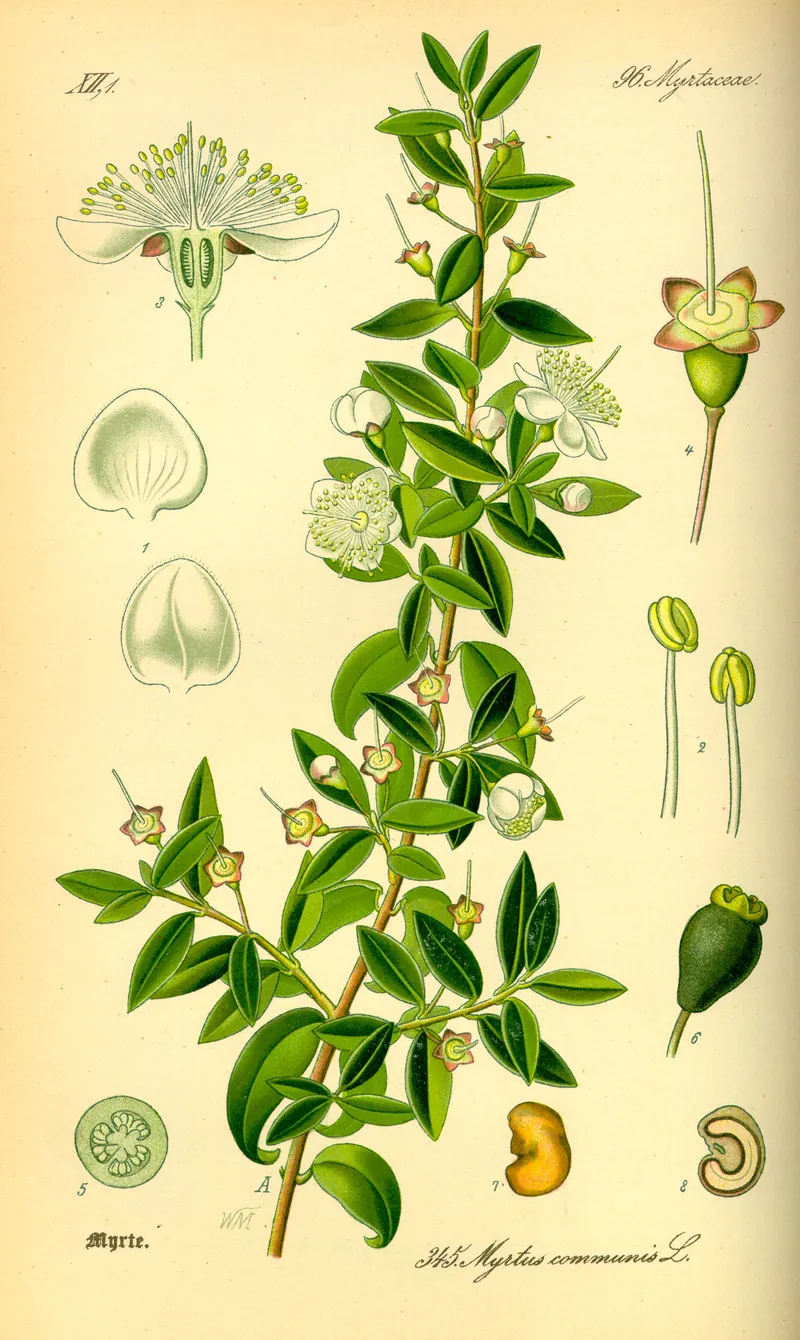
Myrtle is Myrtus communis, an evergreen shrub of the Mediterranean and the Middle East with glossy, aromatic leaves and white flowers. Its essential oil is distilled from the leaves and twigs, mostly in Morocco, Tunisia and Corsica.
In the bottle
Myrtus communis
Fresh camphor-green with a soft floral sweetness — a gentle cousin of eucalyptus.
First sniff: Fresh green-camphor, like a softer eucalyptus, with a floral hint. Once it settles: A gentle, clean herbal-woody trace. Reminds people of: Myrtle leaves, eucalyptus, fresh green herbs.
Myrtle is fresh, green and gently camphoraceous, like a softer, sweeter eucalyptus with a faint floral lift. It is a top note that brings air and clean greenery to incense, cedar and citrus blends, and it keeps resinous accords from feeling heavy. The Atlas study formula “Cedar & Frankincense” uses it for exactly that reason.
Blends well with
Lavender, Bergamot, Cedarwood, Frankincense, Hyssop, Rosemary.
Study formulas in the Atlas
Cedar & Frankincense (Beginner): Frankincense and cedar (Scripture’s timber of the temple), myrtle for green freshness, myrrh, benzoin and labdanum for the warm, prayerful base. It draws on Scripture’s materials without copying the Exodus 30 incense. Open it in the Scent Atlas.