Scripture Scents
Frankincense
Hebrew levonah · Greek libanos
Exodus 30:34 · Matthew 2:11 · Revelation 18:13
Frankincense is the scent most people think of when they think of worship. It was one of the four ingredients of the tabernacle incense, a costly import carried up from southern Arabia, and one of the three gifts the magi laid before the child Jesus.
In Scripture
And going into the house, they saw the child with Mary his mother, and they fell down and worshiped him. Then, opening their treasures, they offered him gifts, gold and frankincense and myrrh.
Matthew 2:11 (ESV)
The Lord said to Moses, “Take sweet spices, stacte, and onycha, and galbanum, sweet spices with pure frankincense (of each shall there be an equal part) …
Exodus 30:34 (ESV)
What use to me is frankincense that comes from Sheba, or sweet cane from a distant land? Your burnt offerings are not acceptable, nor your sacrifices pleasing to me.
Jeremiah 6:20 (ESV)
In the Law, “pure frankincense” is joined with stacte, onycha and galbanum to make the holy incense, and it is also laid on the grain offering (Leviticus 2:1–2) so that a portion rises to God as “a pleasing aroma.” The prophets show how costly it was: Jeremiah names “frankincense that comes from Sheba,” a long caravan journey away, and warns that even expensive incense means nothing without obedience. In Matthew the magi bring gold, frankincense and myrrh. Christians have long read the gifts as a confession of who the child is, with frankincense as the gift fit for worship.
What it is today
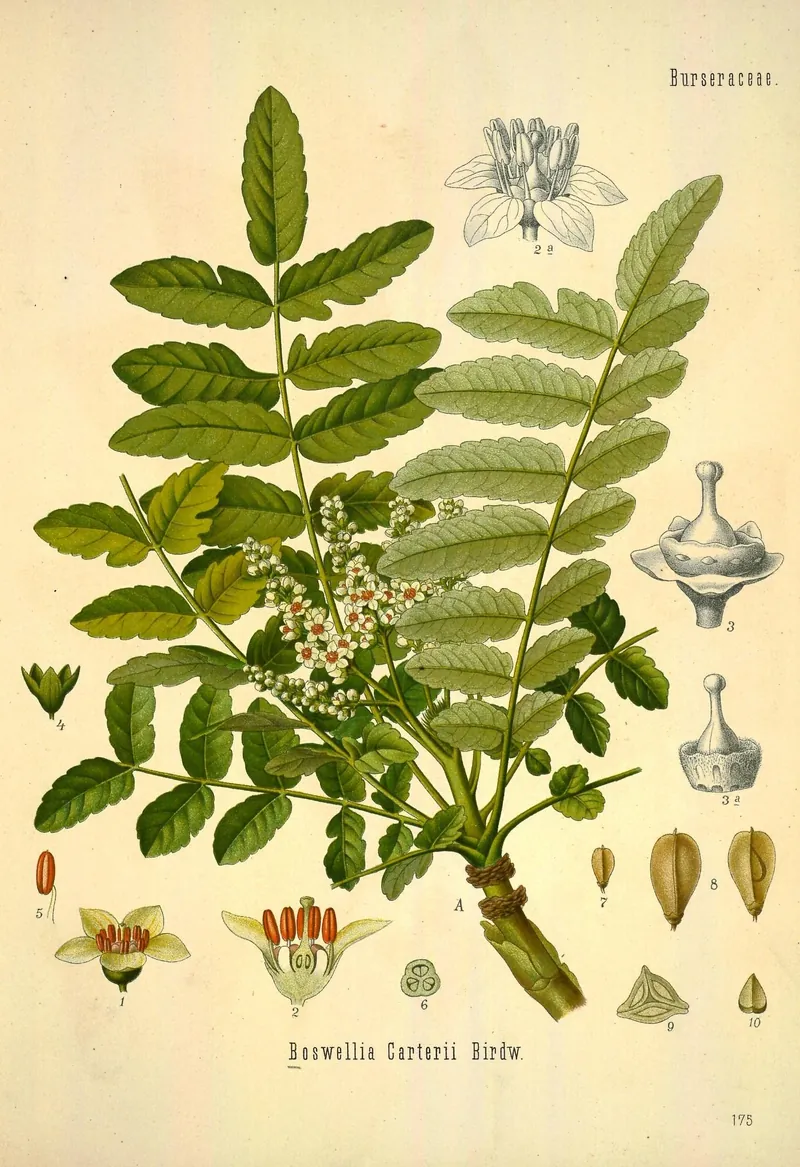
Frankincense is the gum resin of Boswellia trees, chiefly Boswellia sacra from Oman, Yemen and Somaliland, and Boswellia carterii and B. frereana from the Horn of Africa. Harvesters cut the bark and let the milky resin “weep” and harden into pale tears over several weeks. Perfumers use it distilled as an essential oil, or extracted with CO₂ or solvents for a heavier resinoid.
In the bottle
Olibanum
Lemony-pine incense, cool and airy at first, then balsamic. The smell of prayer and old churches.
First sniff: Bright, lemony-pine resin — cool and airy. Once it settles: Soft, balsamic, church-incense warmth. Reminds people of: Church incense, frankincense tears, a pine forest.
In a blend frankincense is surprisingly bright. The top is lemony and peppery, almost like pine needles, before it settles into the cool, dry incense people recognize from old churches. It lifts heavy bases and gives florals a sense of air and stillness. It is generous rather than demanding: a few percent is enough to make a whole blend feel prayerful.
Blends well with
Myrrh, Labdanum, Cedarwood, Rose, Bergamot, Black Pepper, Benzoin, Elemi, Oud, Vetiver, Lavender, Sandalwood, Spikenard, Myrtle.
Study formulas in the Atlas
Cedar & Frankincense (Beginner): Frankincense and cedar (Scripture’s timber of the temple), myrtle for green freshness, myrrh, benzoin and labdanum for the warm, prayerful base. It draws on Scripture’s materials without copying the Exodus 30 incense. Open it in the Scent Atlas.