Scripture Scents
Calamus (sweet cane)
Hebrew qaneh bosem
Exodus 30:23 · Song of Songs 4:14 · Isaiah 43:24 · Jeremiah 6:20
“Sweet cane” or “aromatic cane” is one of the four spices of the holy anointing oil, and one of the Bible’s most debated plants. Isaiah and Jeremiah both use it as a picture of costly worship that God did not want.
In Scripture
You have not bought me sweet cane with money, or satisfied me with the fat of your sacrifices. But you have burdened me with your sins; you have wearied me with your iniquities.
Isaiah 43:24 (ESV)
What use to me is frankincense that comes from Sheba, or sweet cane from a distant land? Your burnt offerings are not acceptable, nor your sacrifices pleasing to me.
Jeremiah 6:20 (ESV)
Take the finest spices: of liquid myrrh 500 shekels, and of sweet-smelling cinnamon half as much, that is, 250, and 250 of aromatic cane, and 500 of cassia, according to the shekel of the sanctuary, and a hin of olive oil. And you shall make of these a sacred anointing oil blended as by the perfumer; it shall be a holy anointing oil.
Exodus 30:23–25 (ESV)
Exodus 30:23 calls for 250 shekels of qaneh bosem, “aromatic cane.” Through the prophets God rebukes Israel with it: “you have not bought me sweet cane with money” (Isaiah 43:24), and “what use to me is … sweet cane from a distant land?” (Jeremiah 6:20). Both passages say that an expensive offering cannot stand in for a faithful heart. Calamus also grows in the Song of Songs’ garden of spices, and Ezekiel lists it in the trade of Tyre.
What it is today
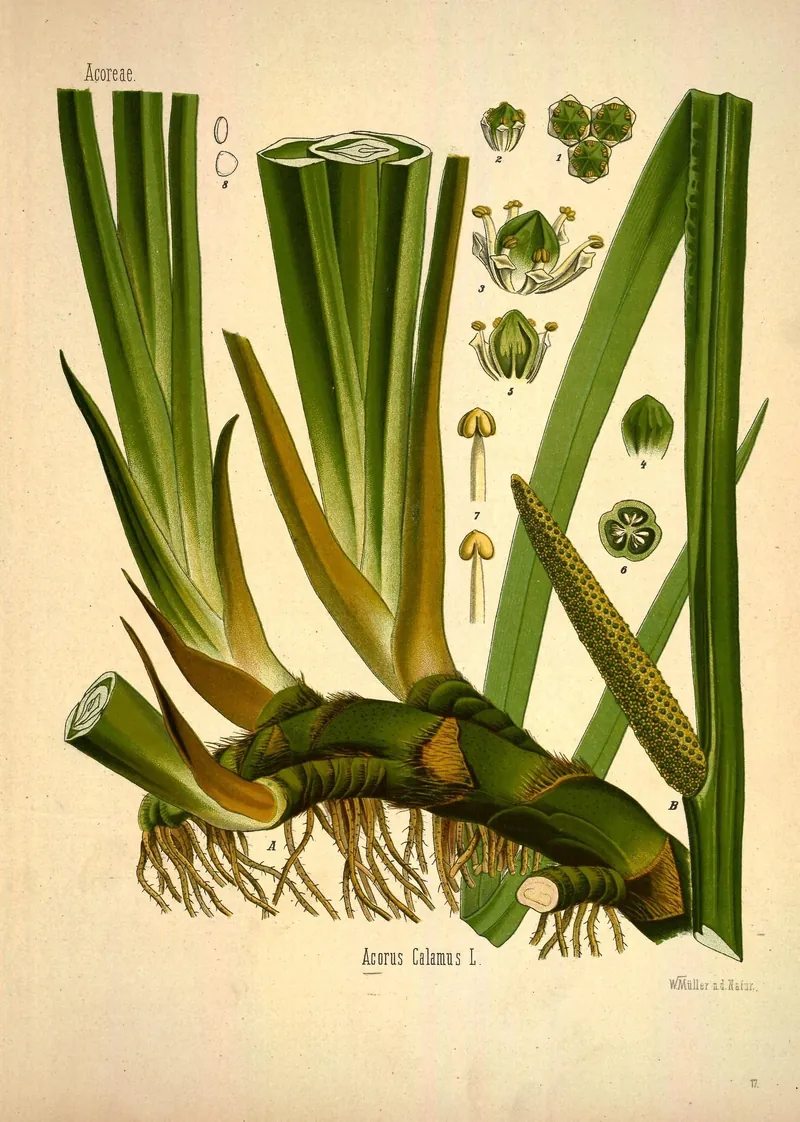
Most translations and many scholars identify the plant as Acorus calamus, sweet flag, a reed of marshes whose root is aromatic. Others propose a fragrant grass such as lemongrass or ginger grass (Cymbopogon), which also traveled as “sweet cane.” Scripture does not settle the question, and honest study should say so.
In the bottle
Sweet flag (Acorus calamus)
Warm, woody-spicy and sweet, with a leathery softness.
First sniff: Warm, woody-spicy and sweet. Once it settles: Soft, leathery-woody warmth. Reminds people of: Spiced wood, sweet roots.
Calamus root oil is warm, woody-spicy and sweet with a soft leathery edge. It must not be used in anything worn on skin. Most calamus oils are rich in β-asarone, which IFRA prohibits in fragrance. It is a material to know and smell, not to wear. If you want a reedy, green-spicy note in a devotional blend, a little vetiver, cardamom or lemongrass is a safe direction.
Safety: Contains asarone, which IFRA prohibits. Study it if you like — don’t use it in anything worn on skin.